Public Allies Leadership Reflecting
Whitney Plantation
Edgard, Louisiana 2024
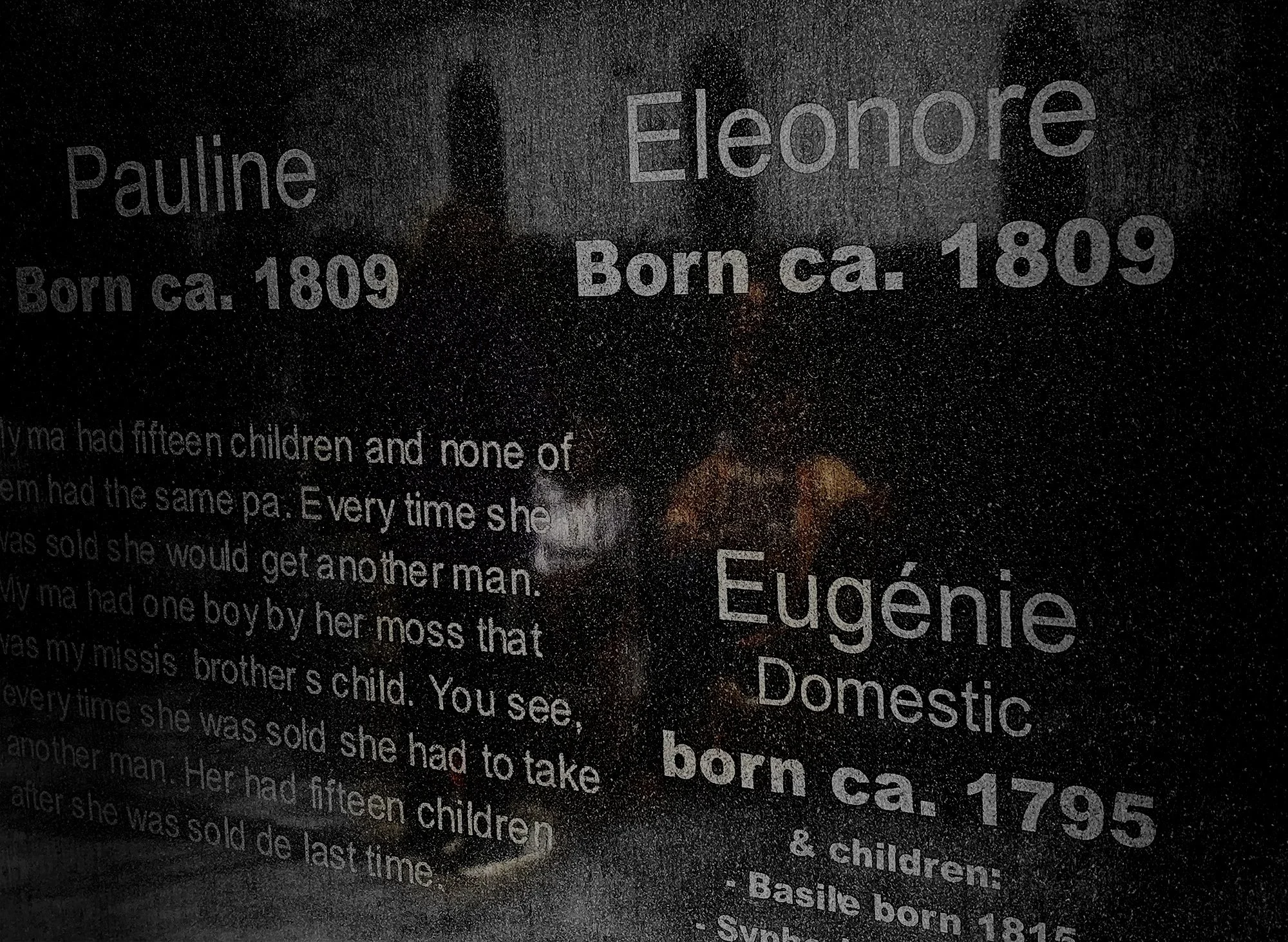
In addition to the objects from its past, the Whitney Plantation presents works of art inspired by its history. There are a series of more than 100 stone monuments engraved with the names of those who had been enslaved. I felt emotions rising as I walked along the row of monuments; I reached for my phone. The monuments were polished; distracting reflections were much more evident to the camera than the eye. I moved around to find a vantage where the reflection became part of the composition, suddenly found one and clicked the shutter before thinking further.
The building in the background is the church that freedmen built during Reconstruction, the blurry figures in the middle are the senior leaders of Public Allies. In the foreground, Pauline's whole one-name life, and window it opens to the entirety of chattel slavery.
This is one image where historical perspective reverses: the record of the past is clear but the people present now, and their choices that will shape the future, are indistinct.
Our work that day was to increase our capacity as a group to recognize and hold each other’s individual reactions when encountering difficult traces of the past. . .
. . .so that, rather than reacting, we can pause and discover what emerges when we together hold the breadth of our individual experiences.
. . .so that we can more clearly see gaps between our intentions and our impact on one another
. . .so that we see more clearly what is at stake in this moment, for each of us as individuals, for the organization we steward and for the communities we serve, as we prepare to choose the path forward.