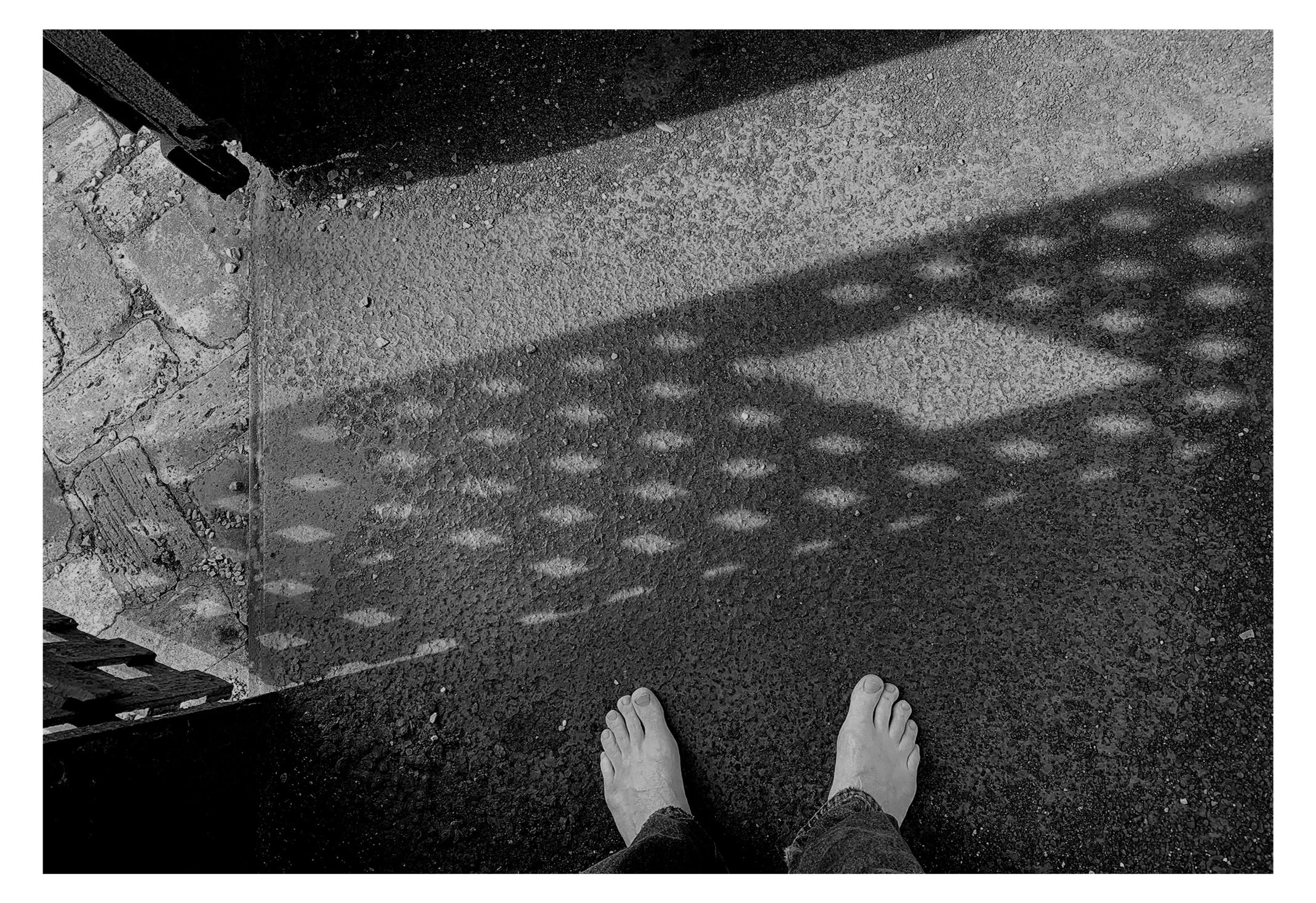
Feet in Jail
Whitney Plantation
Edgard, Louisiana 2024
For twenty five years I have been on the governing board of Public Allies, a national nonprofit that develops the capacity of young adults to lead collaboratively and inclusively in service of the common good.
A few years ago, a reorganization effort within Public Allies went badly off the rails; sites closed, staff were laid off, people of color disproportionately suffered, trust between individuals and between different parts of the organization was broken. We had to hold 20 board meetings in 30 days to manage the crisis and stabilize the organization. Within a year, Public Allies was stable and back on course, but the turmoil had left lasting hurt and mistrust.
We needed to rebuilding trust and to increase the capacity of the team to work through difficult decisions. We needed to confront openly the issues, both explicit and implicit, that challenged us. To this end board and senior leadership made a corporate visit to the Whitney Plantation in Louisiana, a plantation that has been turned into a museum curated from the perspective of the enslaved.
We met as a group over breakfast to prepare for the tour and the strong emotions encountering that history might evoke. At the end of the meeting one of the members of the board said, “If something catches your attention, or emotions rise up, take a picture of the scene with your cell phone and send it to me, so that we can all look at them together.”
On the tour we stopped at a jail that was built after Reconstruction to replace whipping as a means of maintaining control. When I stepped into the cell I tried to imagine what it was like to be confined there. I took off my shoes to feel the floor and experience the cell with more of my body. The shadow of the door made a striking pattern on the floor. My photographer’s reflexes were reactivated, but now in the company of a group with immediate purpose rather than in leisurely solitude.
If I had been my myself, it would have been an easy decision, an echo of past encounters with traces of past times, to take off my shoes. Here it felt more awkward – would others see it as performative, trespass on sacred ground, self-centered…?
I’ve come to think that the boundary between witness and trespass is seldom precise and clear; it evolves as the consciousness of those involved changes. The only way I know to place that boundary is to step mindfully into the uncertainty, and to be prepared to ask for forgiveness.